
Most players who are stuck are not stuck because of one bad habit — they are stuck because they never measure anything. They queue, they win some, they lose some, and the average stays flat. Improvement is what happens when you pick a small number of things, work on them deliberately, and check whether the numbers moved.
Here is a routine that works, ordered by how much it pays off relative to effort.
1. Shrink your champion pool
Two champions per role, three at most. Every extra champion multiplies the number of matchups, power spikes, item paths and cooldowns you have to hold in your head. Depth beats variety at every rank below Master.
If you are not sure what to commit to, look at Champion Rankings for your role and see what people are actually climbing with on the current patch — then pick something you enjoy from that set, not just the top of the list.
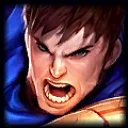 Garen
Garen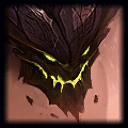 Malphite
 Annie
Annie Ashe
Ashe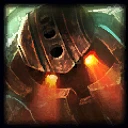 Nautilus
2. Fix the fundamentals you can count
The three that move win rate the fastest are all measurable, which means you can practise them without guessing.
- •CS per minute — aim for a number and check it after every game. Compare against the CS/min entries in Records to see what the ceiling looks like
- •Deaths — not KDA, just deaths. Cutting two deaths per game is usually worth more than adding two kills
- •Vision — wards placed and wards killed. Control wards in particular are the cheapest advantage in the game
| Metric | What to aim for | Where to check |
|---|---|---|
| CS per minute | Set a target, review every game | Records → CS/min |
| Deaths per game | Cut two, do not chase kills | Match history |
| Control wards | Buy one every time you have gold | Match history |
3. Learn waves before you learn mechanics
Wave management decides where fights happen, and where fights happen decides who wins them. Knowing when a wave will crash, when to slow push and when to give up a wave to reset is worth more than any combo you can practise in the practice tool.
A simple starting rule: never walk away from a wave that is about to crash into your tower, and never dive when the enemy wave is pushing into them.
4. Use your losses
Review one loss per session, not ten. Watch only up to the first big mistake, identify what you would do differently, and stop the replay there. One clear lesson per session compounds; a vague sense that you played badly does not.
Rank Distribution is useful context here — seeing what percentage of players sit in each tier tends to make a rough patch feel less like a personal collapse.
5. Protect your mental
- •Hard stop after two losses in a row. The third game after two losses is statistically your worst
- •Dodge a lost champion select. Losing LP to a dodge is cheaper than losing LP to a 30-minute game plus the tilt that follows
- •Duo with someone who communicates, or solo queue. Duoing with a friend who flames is worse than playing alone